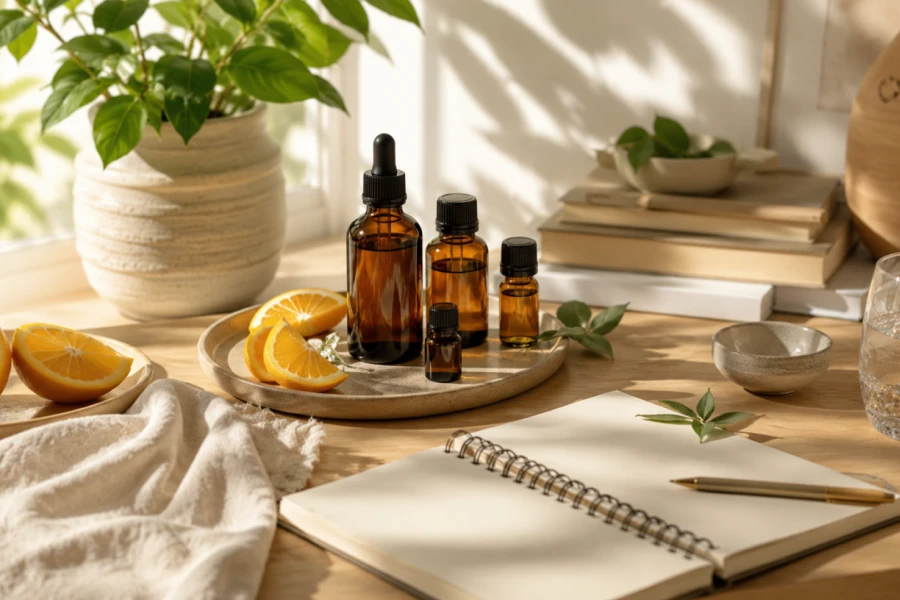
Essential Oils for Stress Relief can support a calmer home atmosphere when used with care. Stress often builds through noise, clutter, urgency, and overstimulation. Scent can create a small pause inside that pressure. A gentle aroma may help your body recognize a transition. It can mark the shift from work to rest. It can also make self-care feel more tangible. The practice works best when it stays simple and safe. You do not need a large oil collection. You need scents that feel comforting and reliable. Calm becomes easier when your environment supports it.
Aromatherapy can make relaxation feel more concrete. Instead of telling yourself to calm down, you create a sensory cue. The room changes, and your routine changes with it. Lavender, bergamot, cedarwood, and citrus blends may feel supportive. Personal response matters, so testing is important. A stress relief oils guide can help organize your options. You can choose scents by time of day and emotional need. This prevents random use and overpowering blends. A steady cue can become surprisingly comforting. Your body often relaxes more easily with repetition.
A calming scent routine should feel easy to begin. Choose a short window, such as ten minutes after work. Open a window slightly if the room feels enclosed. Add only the recommended amount of oil. Pair the scent with one relaxing action. That action might be stretching, journaling, tea, or quiet music. Avoid multitasking during the first few minutes. A calming scent rituals resource can make the routine more intentional. Stress relief improves when signals stay consistent. Your mind learns what the ritual means.
Work breaks need gentle scents that do not overwhelm concentration. Citrus, rosemary, mint, or soft herbal blends may feel refreshing. Keep diffusion brief in shared spaces. A personal inhaler or scented cotton pad may be more practical. Use scent alongside breathing rather than as a distraction. Step away from the screen when possible. Let your shoulders drop before returning to tasks. Keep the routine respectful of coworkers and household members. The goal is a reset, not a perfume cloud. Small sensory breaks can help the day feel less compressed.
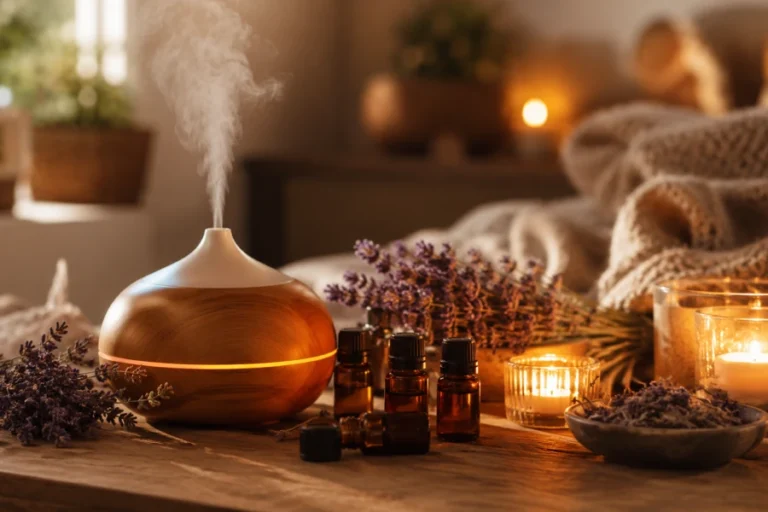
Bedtime scents should feel quiet and familiar. Lavender, chamomile-style blends, cedarwood, or gentle bergamot may suit evening routines. Use them before sleep rather than all night. This helps create a transition without overexposure. Keep the diffuser away from your face and bedding. Follow safety guidance for children, pets, and sensitivities. A home aromatherapy guide can help you choose safer methods. Pair the scent with dim lighting and slower movement. Repetition teaches your body to wind down. A calm bedroom begins before you close your eyes.
Many people use too much oil too quickly. Strong scent can become irritating instead of soothing. Another mistake is blending too many oils at once. Simple combinations are easier to understand and adjust. Ignoring ventilation can also make the room feel heavy. Applying oils undiluted can create skin problems. Forgetting pets is another serious concern. Some animals are sensitive to essential oils. Safe habits protect everyone in the home. Thoughtful use keeps aromatherapy pleasant and supportive.
Begin with one calming oil and one uplifting oil. Test each separately before blending. Notice whether the scent relaxes, energizes, or irritates you. Use a small amount for a short time. Keep notes if you want clearer patterns. Pair each scent with a simple calming action. Repeat the routine at the same transition point. Adjust based on comfort and sensitivity. Stress support works best when it feels steady. Your home can become a softer place to recover.


Leave a comment